Master Java Programming
In-depth Java Course covering Core and Advanced Concepts.
About This Course
Program Overview
Why Choose This Course?
Platform Independent
Write once, run anywhere.
Enterprise Ready
Standard for large scale apps.
Robust
Strong memory management and security.
What You'll Learn
Course Curriculum
- What is Java & why should you learn
- Approach to learn Java language
- Writing your first Java statement using jshell
- Brief history of Java & release timeline
- JDK vendors in Java ecosystem
- Installation of Java (Mac, Unix, Linux, Windows)
- Introduction to Java Keywords
- Deep dive: byte, short, int, long, float, double
- Syntax to declare and store primitive data types
- Naming variables & case styles
- Boolean and char data type deep dive
- Overflow and underflow in integers
- Numeric literals (underscore, octal, hex, binary)
- Type casting (implicit & explicit)
- Introduction to String in Java
- Life cycle of a Java program: JDK, JRE, JVM
- Platform independence of Java
- Java program code structure
- Writing first Java class & compilation
- Introduction to IDE: IntelliJ IDEA
- Creating projects, themes, and running first program
- Object-Oriented Programming in Java
- Creating classes & declaring fields
- Methods: definition, signature, return statement, invocation
- Object creation & initialization
- Constructors: no-args, overloading, chaining
- Instance & static initialization blocks
- Static vs instance variables & methods
- Heap memory vs stack memory
- Null, object destruction, garbage collection
- Encapsulation concepts
- Single-line and multi-line comments
- Javadoc comments & generating documentation in IntelliJ
- String pool, intern(), concat(), escape sequences
- Length, comparison, charAt, empty check
- Case conversion, primitive conversions, trimming, substring, replace, split, join
- printf(), format(), mutable strings, text blocks
- Converting string to primitive types
- Operators & operands, expressions
- Assignment, arithmetic, string concatenation, modulus
- Unary, compound assignment, increment & decrement
- Relational & logical operators
- Bitwise operators: AND, OR, XOR, shifts
- Ternary operator, operator precedence & associativity
- If-else, nested if, ternary operator
- Switch-case & switch expression
- Loops: while, do-while, for, nested for
- Break, continue, return
- Local variables & scope
- Packages, benefits, creating packages
- Naming conventions, import statements, static import
- Access modifiers: classes, methods, fields
- Deep dive on POJO classes
- Introduction to Inheritance & Object class
- IS-A & HAS-A relationships
- Upcasting, downcasting, instanceof
- Static vs dynamic binding
- Polymorphism: overriding & overloading
- Method & field hiding
- Constructors with inheritance, this & super keywords
- Abstract classes, final keyword, sealed classes
- Interface definition & implementation
- Constants in interfaces
- Default & static methods (Java 8)
- Multiple inheritance using interfaces
- Marker & functional interfaces
- Comparison: Class vs Abstract Class vs Interface
- Introduction, declaration, initialization
- Array length, iteration (for, for-each)
- Copying, converting, sorting, searching, filling
- Multidimensional arrays: 2D, jagged, 3D
- Basic input with System.out.println
- BufferedReader & Scanner usage
- Reading numbers, prime check, file content
- Comparison of BufferedReader vs Scanner
- Logging best practices
- Try-catch blocks, multiple catch, finally
- Try-with-resources (Java 7)
- Checked vs unchecked exceptions
- throw vs throws, exception propagation
- Nested try blocks, custom exceptions
- final, finally, finalize
- Methods: getClass, hashCode, equals, toString, finalize, clone
- Shallow vs deep cloning
- Mutable vs immutable objects
- Record classes (Java 16), var (Java 10)
- Limitations of arrays, introduction to collections
- Wrapper classes: boxing, unboxing, caching
- Collection Framework hierarchy
- Collection interface, sequenced collections (Java 21)
- ArrayList: creation, iteration, sorting, custom Comparator
- LinkedList: creation, iteration, operations, performance
- ArrayList vs LinkedList
- Why generics, generic classes & methods
- Covariance, contravariance, wildcards
- HashMap, TreeMap, LinkedHashMap
- Key-value storage & retrieval, iteration
- Immutable maps (Java 9)
- HashSet, TreeSet, LinkedHashSet
- Iteration, set operations, immutable sets (Java 9)
- List vs Set
- Enum constants & advantages
- EnumSet, associating data with enums
- Example: Toll calculator
- Legacy date/time classes: Date, Calendar, TimeZone
- Java 8 Date & Time API: LocalDateTime, Instant, Duration, Period, ZonedDateTime
- Formatting & parsing with DateTimeFormatter
- Non-ISO calendars, Daylight Saving, conference scheduling
- Imperative vs functional programming
- Lambda expressions & syntax
- Functional interfaces: Predicate, Function, Consumer, Supplier, BiFunction
- Anonymous inner class vs lambda
- Lexical scoping & this/super in lambda
- Static, instance, class-type, constructor references
- Creating streams, stream pipeline
- Intermediate operations: map, flatMap, filter, limit, skip
- Terminal operations: reduce, collect, collectingAndThen, groupingBy, partitioningBy
- Parallel streams vs collections
- Optional, ifPresent, orElse, orElseGet, orElseThrow, map & filter
- Filtering nulls in streams
- Parallel vs concurrent execution
- Thread creation & methods
- wait, notify, notifyAll
- Race condition, synchronized, volatile
- Deadlock & fixes
- Virtual threads (Java 21)
- Multi-File Source Code Programs
- Compiling & Running Multi-File Projects
- Benefits of Multi-File Source Code
- Unnamed Variables in Java
- Unnamed Variables in Java
- Pattern Matching Enhancements
- Ignoring Values with _
- Practical Examples and Best Practices
- Introduction to Markdown in JavaDocs
- Headings, Lists, and Formatting
- Embedding Code Blocks in Documentation
- Examples of Markdown JavaDocs
- Generating Markdown Documentation with IntelliJ / javac
- Best Practices for Professional API Documentation
- Overview of Stream Gatherers
- Creating Gatherers for Collections & Streams
- Intermediate Operations with Gatherers
- Finisher Functions and Terminal Operations
- Parallel Gatherers for Performance
- Stateful Gatherers and Mutable Operations
- fold(), scan(), mapConcurrent() Methods
- windowFixed & windowSliding Methods
- Examples and Use Cases
- Module Import Declarations
- Using Modular Projects in Java
- Compact Source Files & Instance Main Methods
- Flexible Constructor Bodies
- Scoped Values: Introduction and Usage
- Scoped Values in Multi-Threaded Programs
- Performance Improvements with Ahead-of-Time (AOT) Compilation
- Practical Demonstration & Best Practices
Frequently Asked Questions
₹4,000
₹6,000 33% OFFThis course includes:
- Platform Independent
- Enterprise Ready
- Robust
Explore More Courses
Discover our full range of professional training programs to elevate your skills.
Python with Django Full Stack
Master Python and Django for robust backend development.
MERN Stack Development
Build full-stack web apps with MongoDB, Express, React, Node.
PHP with Laravel Full Stack
Modern Web Development with PHP and Laravel.
Backend Development with Laravel
Deep dive into backend logic with PHP and Laravel.
Backend Development with Django
Become a Python Backend Engineer with Django.
Backend Development with Node.js & Express
Master Server-Side JavaScript with Node.js.
Frontend Web Development Mastery
Master the art of building modern, responsive user interfaces.
WordPress Development
Build Custom Themes and Plugins for WordPress.
Master C & C++ Programming
Learn C and C++ from beginner to advanced level.
Master PHP Programming
Complete PHP Language Mastery Course.
Master Python Programming
Comprehensive Python Course for Beginners to Advanced.
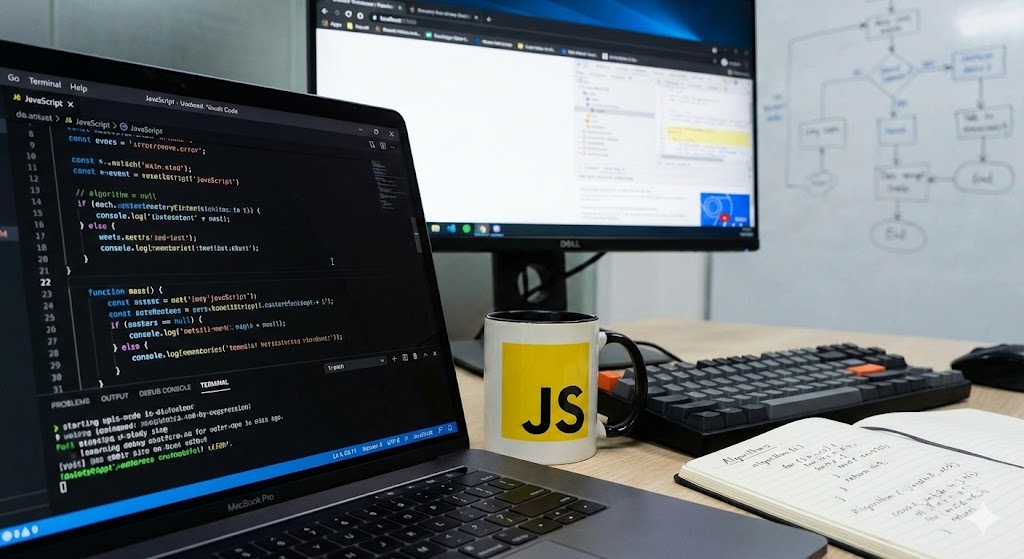
Master JavaScript Programming
Deep dive into Modern JavaScript (ES6+).
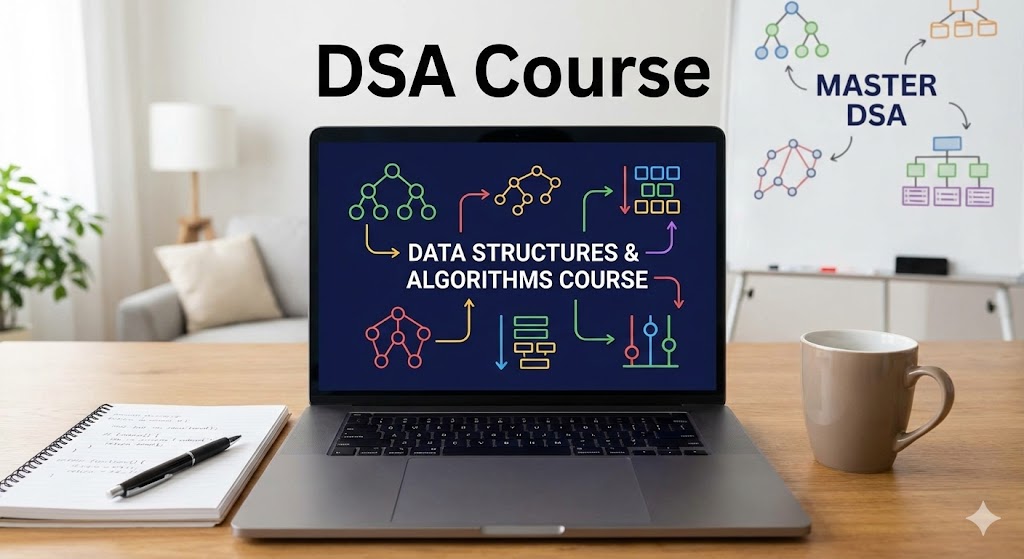
Data Structures & Algorithms (DSA)
Crack Coding Interviews with DSA Mastery.
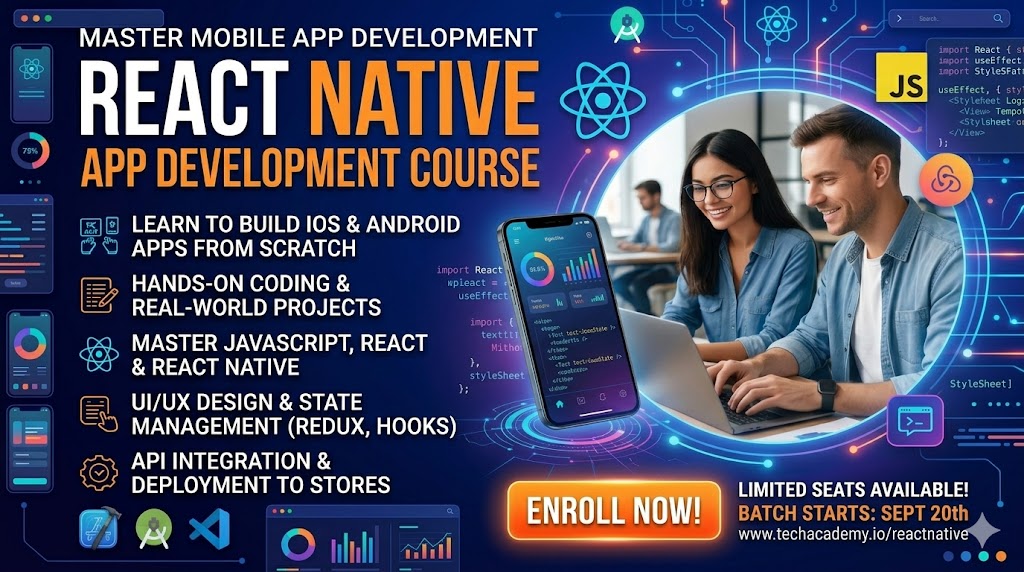
React Native App Development
Build cross-platform mobile apps for iOS and Android.
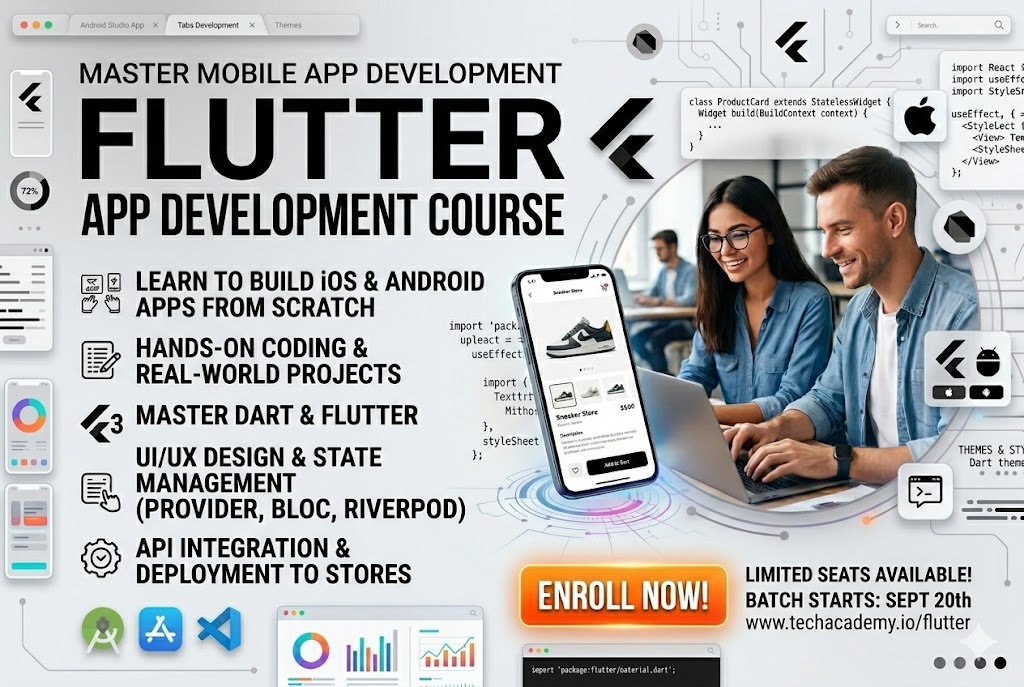
Flutter App Development
Create beautiful, fast apps with Google's UI toolkit.
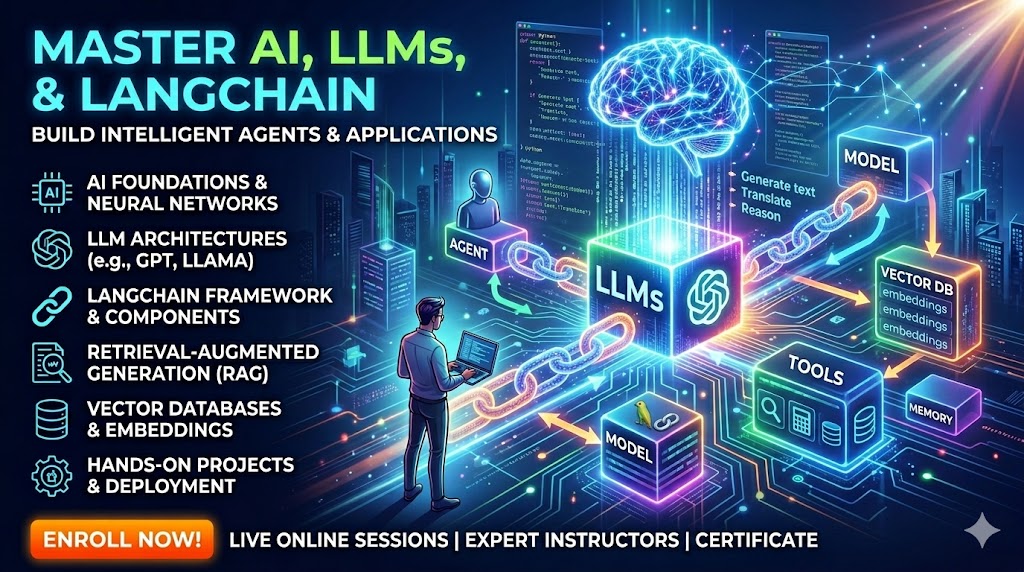
Introduction to AI, LLMs & LangChain
Beginner-friendly guide to AI, Large Language Models, and LangChain.
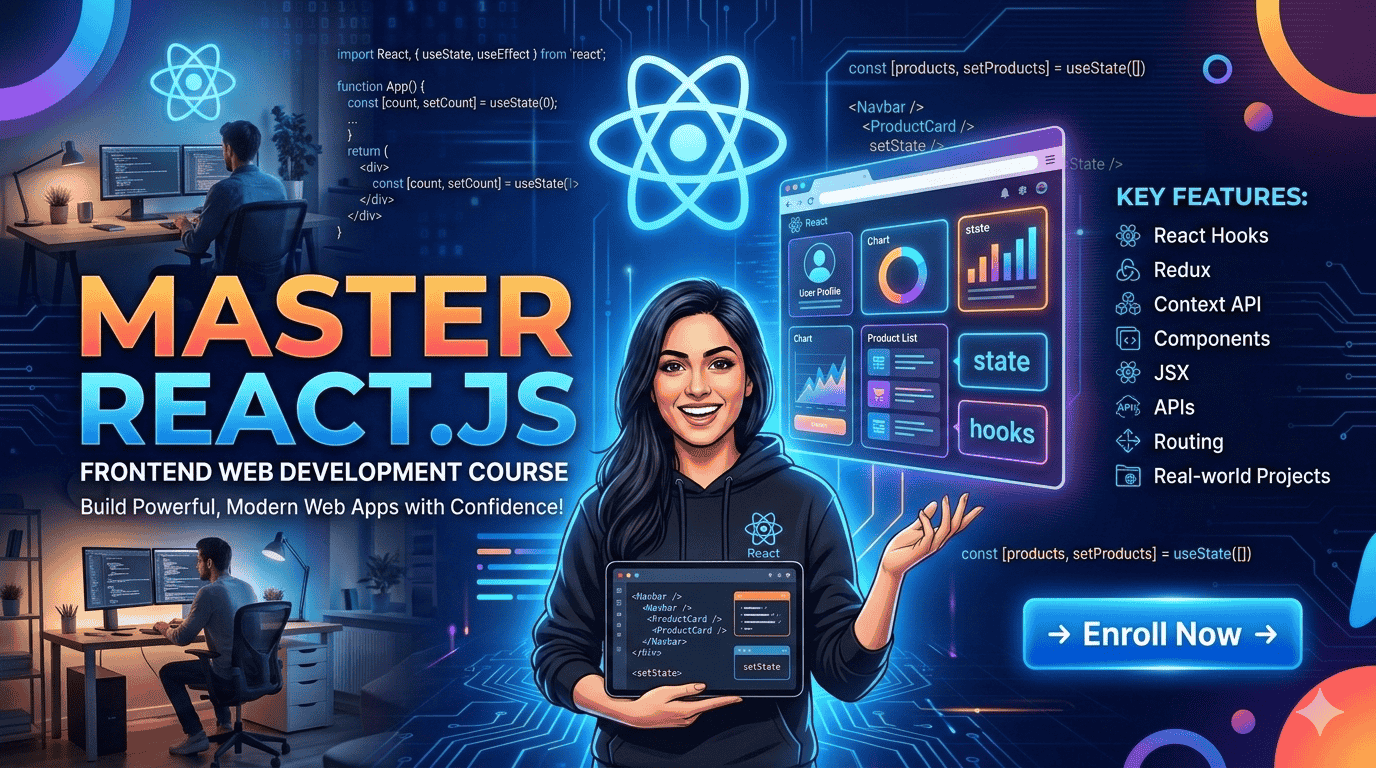
React JS Front-End Web Development
A comprehensive, hands-on course that teaches you to build modern, scalable front-end applications using React 19, covering core concepts, Hooks, routing, API integration, CRUD operations, and advanced features for real-world development.
Python with Django Full Stack
Master Python and Django for robust backend development.
MERN Stack Development
Build full-stack web apps with MongoDB, Express, React, Node.
PHP with Laravel Full Stack
Modern Web Development with PHP and Laravel.
Backend Development with Laravel
Deep dive into backend logic with PHP and Laravel.
Backend Development with Django
Become a Python Backend Engineer with Django.
Backend Development with Node.js & Express
Master Server-Side JavaScript with Node.js.
Frontend Web Development Mastery
Master the art of building modern, responsive user interfaces.
WordPress Development
Build Custom Themes and Plugins for WordPress.
Master C & C++ Programming
Learn C and C++ from beginner to advanced level.
Master PHP Programming
Complete PHP Language Mastery Course.
Master Python Programming
Comprehensive Python Course for Beginners to Advanced.
Master JavaScript Programming
Deep dive into Modern JavaScript (ES6+).
Data Structures & Algorithms (DSA)
Crack Coding Interviews with DSA Mastery.
React Native App Development
Build cross-platform mobile apps for iOS and Android.
Flutter App Development
Create beautiful, fast apps with Google's UI toolkit.
Introduction to AI, LLMs & LangChain
Beginner-friendly guide to AI, Large Language Models, and LangChain.
React JS Front-End Web Development
A comprehensive, hands-on course that teaches you to build modern, scalable front-end applications using React 19, covering core concepts, Hooks, routing, API integration, CRUD operations, and advanced features for real-world development.